
Scam Warnings
Asked to Pay a Fee to Release Casino Winnings? Stop and Verify First
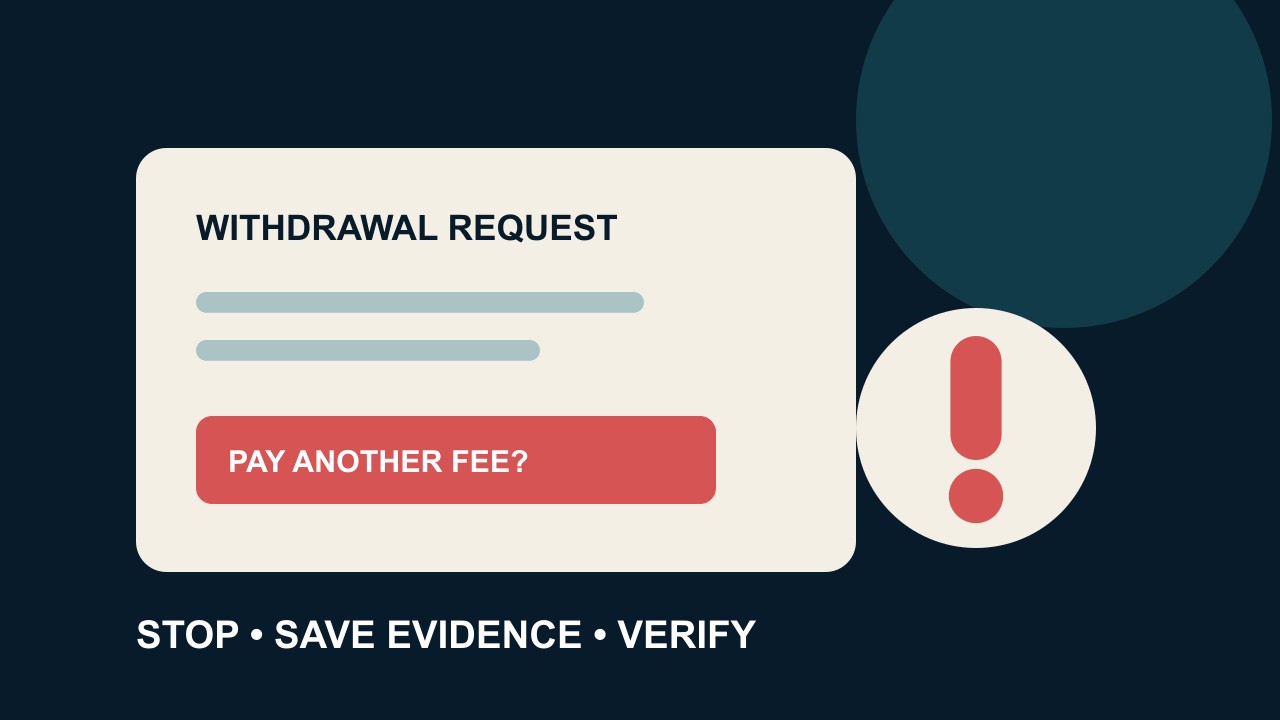
An unexpected demand to send fresh money before a casino withdrawal is released is a serious warning sign. Do not pay simply because the message calls the charge a tax, insurance premium, wallet-verification deposit or refundable security fee. Stop, preserve the evidence and verify the demand through contact details you find independently.
That does not mean every withdrawal charge proves fraud. A licensed operator may have a disclosed cashier fee or a payment provider may apply a conversion cost. The crucial difference is how the charge is described, where it was disclosed and how it is collected. A fee shown in published terms and deducted transparently from a balance differs from an urgent instruction to send new money to a person, private wallet or unrelated account.
For Great Britain-licensed operators, the Gambling Commission's guidance says any permitted withdrawal-processing fee must be transparent and cost-reflective. A clause in a website's terms is not enough to establish that a demand is lawful. Tax treatment also depends on jurisdiction: confirm any claimed tax obligation independently with the relevant tax authority or a qualified adviser, not the person demanding payment.
How the pressure pattern works
The screen may show a large balance or supposed win. When you request a withdrawal, support says one more payment is necessary. After that payment, another problem appears: a tax clearance, compliance certificate, liquidity charge or upgraded account level. The requested amount often grows while the promised release date keeps moving.
Treat urgency, secrecy and changing recipient details as risk signals. Cryptocurrency to a private wallet, gift cards, wire transfers, payment-app transfers or payment to a named individual are especially difficult to reverse. A professional-looking dashboard is not proof that the displayed balance exists.
Verify without using the message's links
First, stop gambling and stop paying. Save the exact web address, messages, balance screen, payment instructions, wallet address or bank details, dates and transaction references. Keep the original files privately; redact account numbers before sharing anything publicly.
Next, type the regulator's address yourself and check the legal entity and licensed domain. A copied licence number does not connect a different domain to the genuine business. Then contact the operator using the address or number on the independently verified site, not the reply button, phone number or QR code in the demand.
Use WTC's casino licence guide to keep the company, licence and domain checks separate. Finding a real company with a similar name does not authenticate the message you received.
Ask for the contractual basis, written calculation and method by which any legitimate charge is collected. Do not send another deposit as “proof” that a card or wallet belongs to you. Identity checks may require documents, but a request for fresh money is not a normal substitute for verifying identity.
If you already paid or shared documents
Contact the bank, card issuer, wallet provider or payment app immediately through its official channel. Describe the transaction accurately and ask what protective steps remain available; eligibility and deadlines vary, so no refund can be promised. Change reused passwords, enable strong multi-factor authentication and watch the affected accounts.
Report suspected fraud to the appropriate authority in your country. A casino complaint, a payment dispute and a fraud report are different processes and may all be relevant. Use WTC's complaint guide for the operator route and its payment reversal guide for cautious payment-provider questions.
Be ready for a second approach. Recovery scammers target people who have already lost money and promise to retrieve it for another advance fee. Do not pay a “specialist” who contacts you unexpectedly or guarantees success.
Quick checklist
- Stop paying and do not gamble more to meet a condition.
- Preserve the URL, messages and payment details.
- Verify the legal entity and domain independently.
- Contact the real operator and payment provider through official channels.
- Report suspected impersonation or fraud.
- Reject recovery offers that demand another upfront payment.
WorldTopCasinos is independent and does not recover funds or represent players in disputes. This guide is general information, not legal or tax advice. Gambling is for adults only; if the pressure to recover money is pulling you back into play, step away and use stronger account, bank or device blocks.