
Safe Gambling
How to Gamble Responsibly Online
Responsible gambling is not a slogan. It is a set of practical barriers that protect money, time, attention and family stability before emotions take over.
Main riskSetting limits only after a loss or emotional session.
Reader actionSet budget, time and access limits before deposit.
UpdatedMay 19, 2026
Responsible gambling starts before deposit
The best time to set limits is before the session starts. Once a player is chasing a loss or trying to extend a win, decisions become emotional. A limit set in that state is less reliable.
Decide the amount you can lose without affecting bills, family needs, savings or obligations. If the loss would create stress tomorrow, it is too high today.
Use barriers, not promises
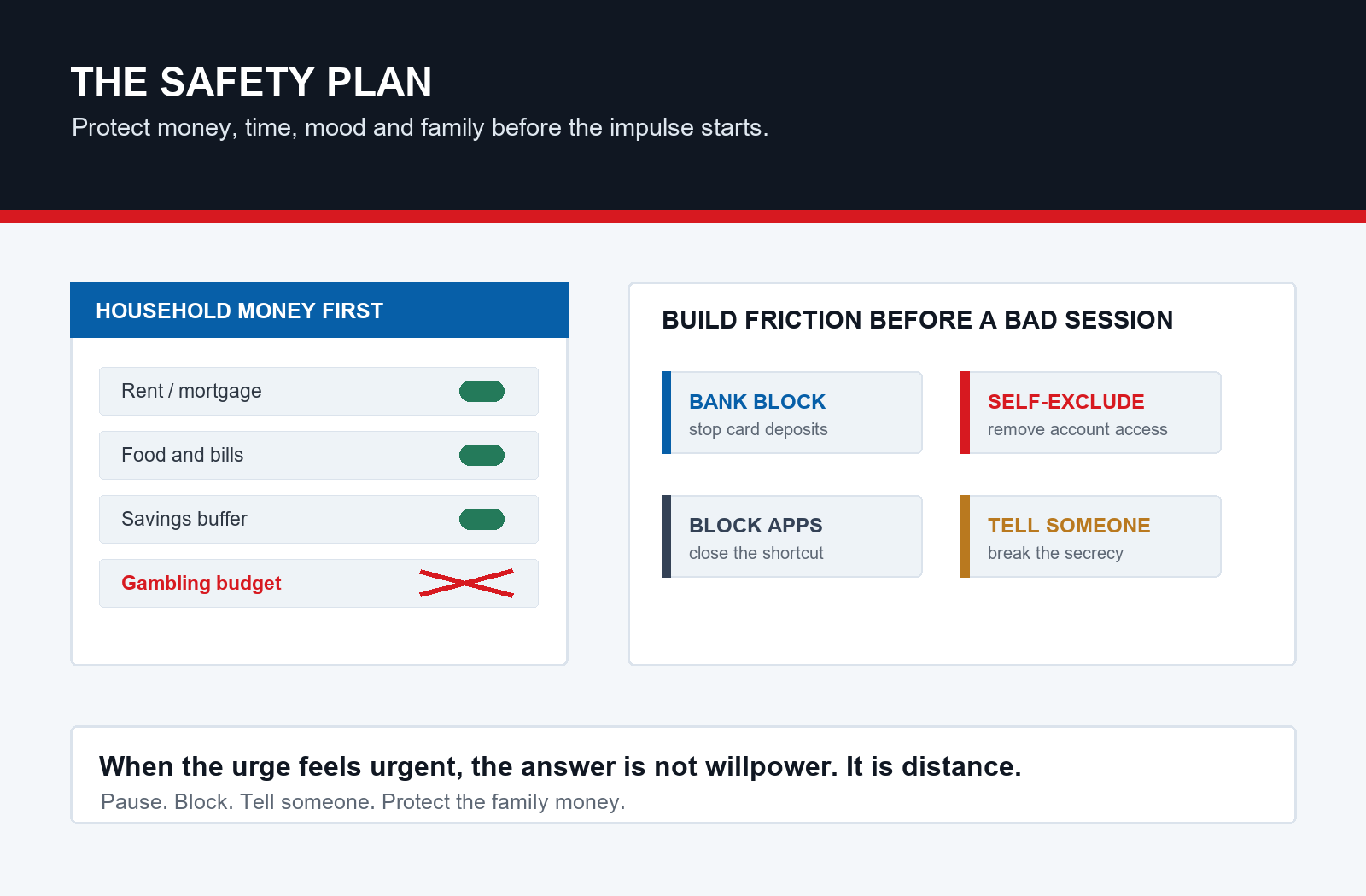
Good intentions are not enough when gambling becomes emotional. Use deposit limits, loss limits, time-outs, reality checks, bank blocks, blocking software and self-exclusion where needed.
If you keep changing limits, opening new accounts or hiding gambling from someone close to you, that is a warning sign. At that point, the goal should shift from controlled play to getting distance and support.
Protect the household, not only the account
Gambling harm does not stay inside a casino account. It can affect rent, debt, sleep, relationships and family stability. That is why the safest approach includes financial boundaries outside the casino too.
Consider separate bill money, bank gambling blocks and honest conversations with someone trusted if gambling has started to create secrecy or pressure.
Quick comparison
Worked example
If monthly disposable entertainment money is $200, a safer gambling budget might be $40 or less, with rent, bills, food, debt payments and savings excluded entirely. If the $40 is lost, the session ends.
The mistake is setting limits after a loss. Limits are strongest when set while calm, before the next urge arrives.
What to compare
Is responsible gambling only for problem gamblers?
No. It is a protection habit for anyone who gambles.
What is the clearest warning sign?
Chasing losses, hiding play or using essential money.
What should family members do?
Protect household money and seek support for themselves too.
Use these reviews to see how this guide applies to real operator checks.
- 32Red Casino ReviewSlots-led UK brand with Platinum Gaming licence records and past UKGC penalty context.
- Tombola ReviewBingo and arcade crossover with Tombola licence, safer gambling and payment checks.
- Sky Vegas Casino ReviewSky Casino and Sky Vegas under Bonne Terre Gaming account 65519 with current domain checks.
- Mr Vegas Casino ReviewVideoslots Limited brand with UKGC domain records and enforcement-history context.
- Jackpot City Casino ReviewSuper Group casino-only brand with international licence and bonus-term cautions.
Editorially checked on May 19, 2026. This article is informational only and is not gambling, financial or legal advice. Rules, licences, payment methods, game data and operator procedures can change, so readers should verify current terms directly before registering or depositing.